

Why is Trauma Surgery Essential for Emergency Medical Care?

Trauma surgery plays a crucial role in emergency medical care. It addresses life-threatening injuries caused by accidents, violence, or natural disasters. The need for skilled trauma surgeons is vital, especially in critical situations where every second counts. These professionals perform intricate procedures, often under immense pressure.

In a bustling emergency room, the reality of trauma surgery is stark. A surgeon may work on a patient with severe internal bleeding. Decisions must be made quickly. The stakes are high, as outcomes can vary dramatically. A successful surgery could save a life, while errors can lead to devastating consequences.

Challenges arise in every case. Not all patients respond well to treatment. Resources can be limited, and surgeons may face burnout. The complexity of trauma care requires constant learning and adaptation. Scene safety, patient stability, and team coordination are essential factors that complicate the surgical process. Each case is unique, highlighting the need for reflection and improvement in trauma care practices.

Why is Trauma Surgery Essential for Emergency Medical Care?

Definition and Scope of Trauma Surgery in Emergency Care

Why is Trauma Surgery Essential for Emergency Medical Care?

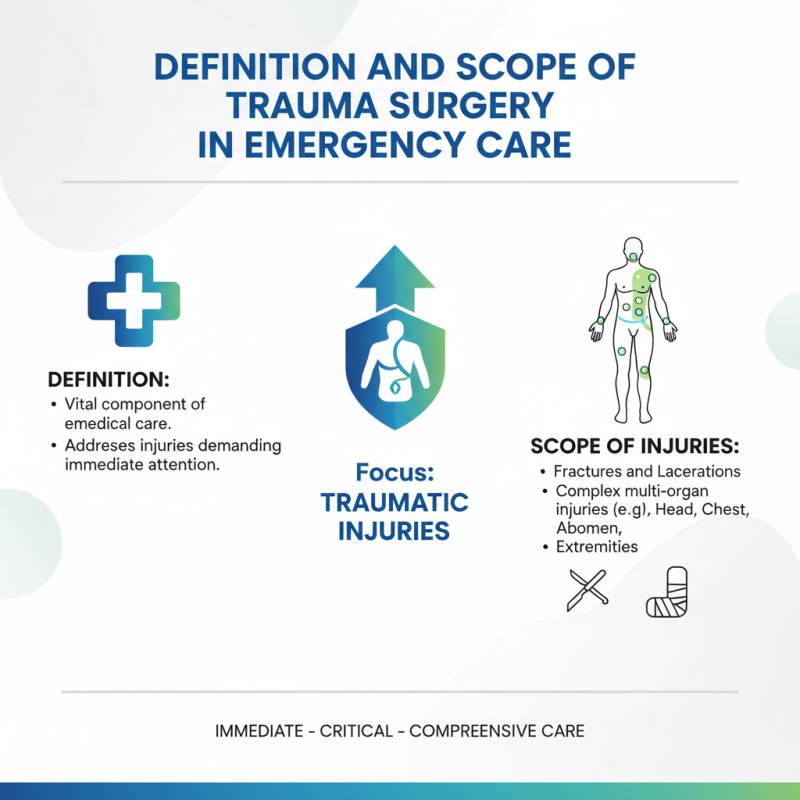
Trauma surgery is a vital component of emergency medical care. It specifically addresses injuries that demand immediate attention. This specialty focuses on treating traumatic injuries to the body. Injuries can range from fractures and lacerations to complex injuries involving multiple organ systems.

The scope of trauma surgery is broad. Surgeons often work within a multidisciplinary team. This includes emergency medicine doctors, anesthesiologists, and nurses. They must quickly assess the severity of injuries. Fast decisions can sometimes mean the difference between life and death. Often, these situations are chaotic. The pressure is intense, and mistakes can happen. The unpredictability of trauma cases requires constant learning and adaptability.

In the operating room, every moment counts. Surgeons must balance speed with precision. They deal with unpredictable injuries that can complicate treatment. Assessing bleeding and damage to organs is crucial. The potential for errors is ever-present. Reflecting on past cases can improve future practices. Each trauma case teaches something new. The pursuit of excellence in trauma surgery is ongoing.

The Role of Trauma Surgery in Managing Acute Injuries

Trauma surgery plays a vital role in treating acute injuries. Every year, traumatic injuries result in millions of hospitalizations. According to the World Health Organization, road traffic accidents alone claim over 1.35 million lives annually. Trauma surgeons are essential in these critical moments. They assess, stabilize, and operate on traumatic injuries swiftly.

In emergency settings, time is crucial. Every minute counts when managing a patient with severe injuries. Studies show that timely surgical intervention reduces mortality rates significantly. For instance, a 2019 report indicated that early surgical intervention can lower the chances of complications by 30%. However, despite advances, delays in trauma care still occur, sometimes due to coordination issues.

Resources are often stretched in emergency departments. This can lead to suboptimal care, making it clear that systems need improvement. Trauma surgery requires collaboration among various healthcare professionals, yet gaps often exist. Ensuring efficient communication and protocols are in place can enhance outcomes. A focus on continuous training and preparedness for trauma care is essential. Addressing current shortcomings may significantly improve patient survival rates and quality of life post-injury.

Key Procedures and Techniques in Trauma Surgery

Trauma surgery plays a crucial role in emergency medical care. It involves a range of critical procedures that save lives. According to the American College of Surgeons, nearly 50 million people seek emergency care for trauma annually in the U.S. This staggering number highlights the importance of trauma surgeons in swift intervention.

Key procedures in trauma surgery include damage control surgery and emergency thoracotomy. Damage control surgery focuses on controlling bleeding and preventing infection. It allows surgeons to stabilize patients before performing more complex repairs later. Emergency thoracotomy is a rapid procedure used to access the chest cavity in life-threatening situations. Statistics show that prompt thoracotomy can reduce mortality rates, underscoring its significance.

However, not all trauma cases are straightforward. Variability in injury patterns can pose challenges. For instance, injuries resulting from car accidents often require immediate attention, but their complexity varies widely. Trauma surgeons must adapt quickly. Continuous training and experience are essential to meet these challenges. The evolving landscape of trauma surgery calls for ongoing reflection and improvement.

Interdisciplinary Collaboration in Trauma Surgery and Emergency Medicine

Collaboration between trauma surgery and emergency medicine is vital. In a high-pressure environment, every second counts. A study reveals that effective teamwork can reduce mortality rates by up to 15%. Trauma cases require fast, efficient responses. Emergency teams must communicate clearly. This ensures that patients receive timely interventions.

Interdisciplinary approaches enhance patient outcomes significantly. A report from the Journal of Trauma found that when trauma surgeons and emergency physicians work together, complications decrease. Despite this, barriers exist. Communication lapses and differing protocols can hinder efficiency. It’s essential to address these issues regularly. Training simulations may help bridge these gaps.

Investment in training and resources is necessary. Many hospitals still lack established protocols for trauma team responses. This leads to confusion during critical moments. The relationship between these specialties must continually evolve, prioritizing patient-centered care. In the end, collaboration can mean the difference between life and death.

Trauma Surgery: Essential for Emergency Medical Care

Patient Outcomes: The Impact of Trauma Surgery in Emergency Situations

Why is Trauma Surgery Essential for Emergency Medical Care?

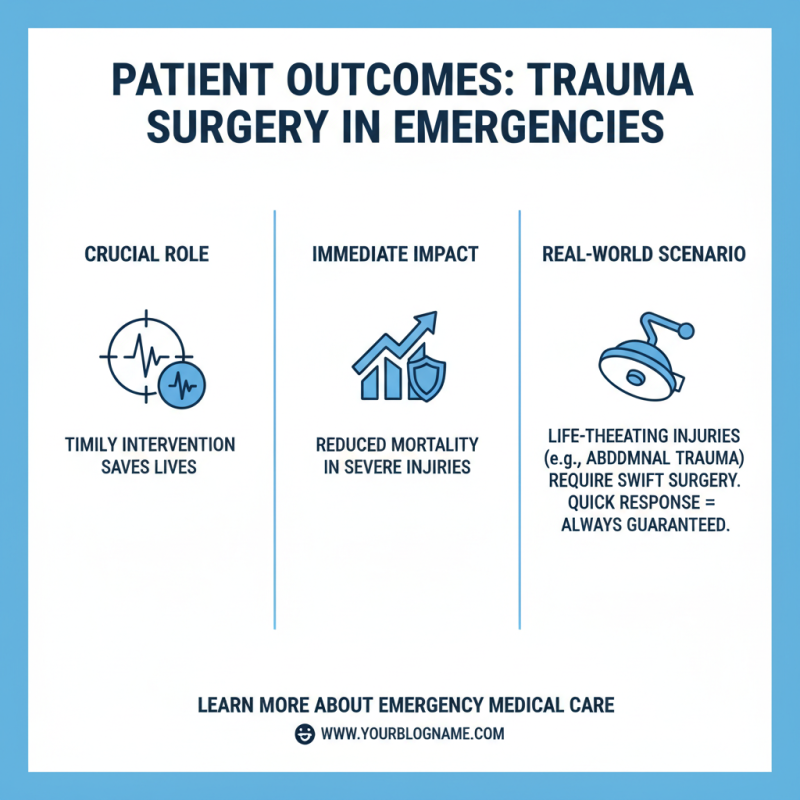
Trauma surgery plays a crucial role in emergency medical care. Timely intervention can significantly influence patient outcomes. Immediate surgical attention reduces mortality in severe injuries. For example, a patient with a life-threatening abdominal injury needs swift evaluation and potential surgery. This quick response is not always guaranteed.

Patient outcomes can vary widely. Some patients recover well, while others face complications. Surgical teams often operate under pressure. They must balance speed with precision. Prioritizing which injuries to treat first can be challenging. This leads to tough decisions, sometimes impacting recovery times.

In emergencies, resource limitations can affect care. Not every hospital has the necessary facilities or staff. Delay in surgical intervention can increase the risk of infection or other complications. Continuous training and improvement are vital. Each case offers opportunities for learning and growth, ensuring better outcomes in future emergencies.

Menu
Quick Contact
close slider


error: Content is protected !!