10 Essential Tips for Effective Spinal Health Care Today
In today's fast-paced world, maintaining good spinal health care has become increasingly crucial. Our spine supports our entire body structure and affects our overall well-being. Many people overlook its importance until they face serious issues. The reality is that preventative care is key to avoiding long-term problems.
Understanding how to care for your spine can lead to better health outcomes. Proper posture, regular exercise, and professional guidance can enhance spinal health. Small changes in daily habits can help reduce pain and improve mobility. However, many individuals still struggle with these adjustments, often feeling overwhelmed or unsure.
By exploring essential tips for effective spinal health care, we can empower ourselves. This knowledge equips us to make informed decisions. It is important to reflect on our personal routines. Are they truly supportive of our spine? Identifying areas for improvement can lead to substantial benefits. Investing time in spinal health care today can shape a healthier tomorrow.

Understanding the Importance of Spinal Health in Daily Life
Spinal health plays a vital role in daily life. It affects posture, movement, and even mood. Poor spinal health can lead to discomfort and limit physical activities. Many people overlook this until issues arise. A stiff neck or a sore back can be daily reminders. These discomforts often encourage us to take our spine for granted.
Maintaining proper spinal health requires effort and awareness. Regular exercise strengthens back muscles and improves flexibility. Simple stretches can alleviate tension and prevent injuries. Daily habits, such as how we sit or lift objects, have a significant impact. Mindfulness in these areas can make a difference. Moreover, even small changes in our routines can lead to better spinal alignment.
Understanding spinal health is about recognizing its importance. Many of us experience lifestyle habits that are detrimental. Hours spent at a desk or on devices contribute to poor posture. Reflecting on these habits is essential. Simple adjustments can promote better spinal care and overall health. Prioritizing spinal well-being enhances quality of life and prevents future issues.
10 Essential Tips for Effective Spinal Health Care Today
| Tip No. |
Tip Description |
Importance |
Frequency |
| 1 |
Maintain Good Posture |
Reduces strain on the spine. |
Daily |
| 2 |
Regular Exercise |
Strengthens back muscles. |
3-5 times a week |
| 3 |
Stay Hydrated |
Maintains disc health. |
Daily |
| 4 |
Use Ergonomic Furniture |
Promotes proper spinal alignment. |
Daily |
| 5 |
Stretch Regularly |
Improves flexibility and reduces tension. |
Daily |
| 6 |
Limit Screen Time |
Reduces eye strain and promotes better posture. |
As needed |
| 7 |
Get Adequate Sleep |
Supports overall recovery and health. |
Nightly |
| 8 |
Visit a Chiropractor |
Aligns spine and relieves pain. |
Monthly |
| 9 |
Wear Supportive Footwear |
Promotes proper alignment. |
Daily |
| 10 |
Manage Stress |
Reduces muscle tension and pain. |
Daily |
Key Practices for Maintaining a Healthy Spine
Maintaining a healthy spine requires consistent effort and awareness. Start with posture. Good alignment while standing or sitting can prevent undue stress. Many people slouch at desks, leading to discomfort. An ergonomic chair can help, but personal awareness is key. Monitor your posture throughout the day. Small adjustments really make a difference.
Movement is vital for spinal health. Regular exercise strengthens the muscles that support your spine. Aim for a mix of strength training and flexibility exercises. Yoga and pilates can enhance your core stability and flexibility. Yet, some might struggle with motivation or consistency. Finding enjoyable activities is essential for long-term commitment.
Listening to your body is crucial. Pain is often a signal that something is off. Ignoring pain can lead to serious issues. Take breaks during long hours of sitting. Standing or walking every hour promotes circulation and helps maintain spinal health. Reflect on your habits and routines. Are they supportive of your spine? Make necessary adjustments to prioritize your spinal well-being.
10 Essential Tips for Effective Spinal Health Care Today
The Role of Exercise in Spinal Health Improvement
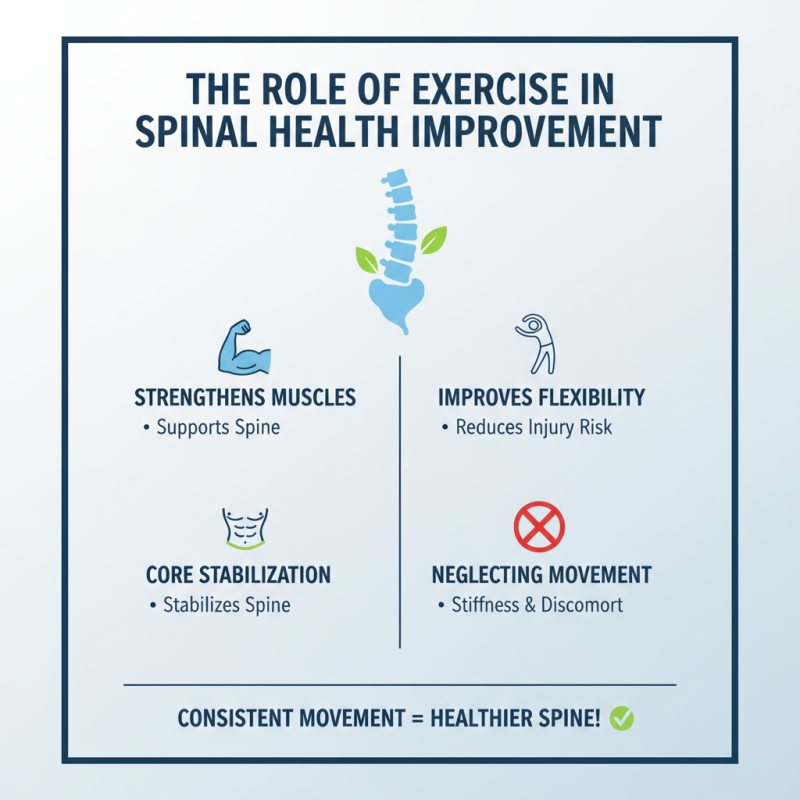
Exercise plays a crucial role in enhancing spinal health. Regular physical activity strengthens the muscles that support your spine. It improves flexibility, reducing the risk of injury. Furthermore, exercises targeting the core muscles can stabilize the spine. However, many people overlook the importance of consistent movement. Neglecting this can lead to stiffness and discomfort.
Incorporating stretching and strengthening routines can greatly benefit spinal health. Activities like yoga and pilates are excellent for maintaining good posture. They focus on alignment and balance, which are vital for spinal well-being. Still, it's important to listen to your body during these exercises. Pushing too hard can cause strain and setbacks. Finding the right balance is key.
Commitment to regular exercise is essential, but it’s not always easy. Life can be hectic, and injuries can occur. People often skip workouts due to pain or fatigue. Yet, even minor adjustments in daily routines can yield positive results. Simple changes, like standing more or walking during breaks, can make a difference. Staying mindful of your body’s needs is crucial for long-term spinal health.
Common Spinal Disorders and Their Prevention Strategies
Spinal health is vital for overall well-being. Common spinal disorders include herniated discs, spinal stenosis, and sciatica. Each condition can significantly impact daily life. Prevention is key in managing these disorders effectively.
Regular exercise strengthens the back and core muscles. Stretching can improve flexibility and relieve tension.
Posture plays an essential role in spinal health. Poor posture while sitting or standing can lead to discomfort and long-term issues. Ergonomic furniture can support good posture. It might seem simple, but small adjustments make a big difference. Weight management also matters. Carrying excess weight puts pressure on the spine.
Mindfulness about daily habits helps. Are you bending correctly while lifting? How about spending hours on a screen? Awareness is crucial. Consultation with a healthcare professional can provide tailored advice. They can assess your spine and suggest preventive measures. Listening to your body is also important. Noticing discomfort early prevents worsening conditions.
Prioritizing spinal health today ensures a healthier tomorrow.
Choosing Professional Care: What to Look for in a Spinal Health Provider
When selecting a spinal health provider, consider their qualifications and experience. Look for specialists with advanced training in spine care. Reports show that certified professionals often achieve better patient outcomes. A 2022 study indicated that patients treated by board-certified chiropractors had a 30% higher satisfaction rate compared to those seeing non-certified practitioners.
Effective spinal care requires communication. A good provider should explain treatment options clearly. Ask about their approach to your specific condition. Active participation in your care increases the chances of improvement. Many patients experience better results when they understand their treatment.
Tip: Research the provider's background. Look for reviews and testimonials. Patients often document their experiences online. This feedback can help guide your choice. Consider visiting in person. Observe the facility's environment and staff interactions. All these factors matter when making an informed decision about your spinal health provider.