

Why Choose a Hand Colposcope for Your Clinic?

Cervical cancer remains a major public health challenge. The International Agency for Research on Cancer reported approximately 660,000 new cases and 350,000 deaths worldwide in 2022. These figures reveal a practical gap between screening recommendations and real clinical access. WHO’s Global Strategy to Accelerate the Elimination of Cervical Cancer also emphasizes timely screening, diagnosis, and treatment, especially in underserved settings.

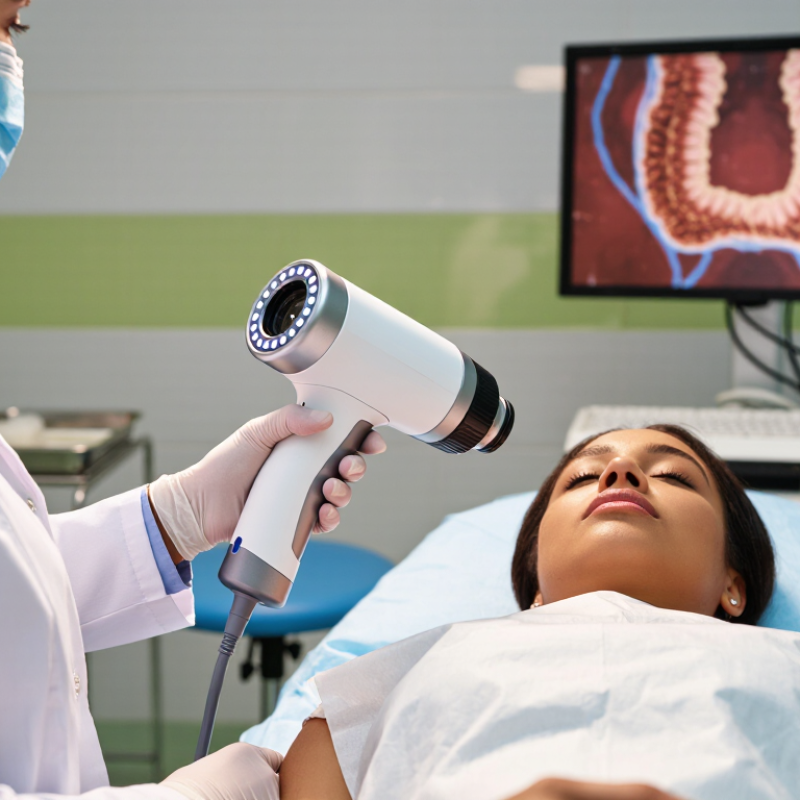
A Hand Colposcope can support this pathway by bringing magnified cervical examination closer to the patient. Its compact design may fit a small examination room, mobile clinic, or outreach vehicle. Clinicians can examine tissue patterns, document findings, and discuss visible changes with patients in real time. Some models connect with smartphones or monitors, helping supervisors review images during training or referral decisions. That matters where specialist colposcopy services are limited.

However, portability is not a substitute for expertise. A smaller device is not automatically a better examination. Image quality, illumination, ergonomics, sterilization procedures, and software security require careful evaluation. WHO guidance stresses quality assurance across the screening process, not only the instrument itself. The ASCCP management guidelines likewise support risk-based clinical decisions, rather than isolated visual impressions.

There is no magic shortcut.

For a clinic, the strongest choice combines validated equipment, trained users, clear referral protocols, and reliable follow-up. A Hand Colposcope may improve access and workflow, but its value depends on how consistently the team uses it. That limitation deserves attention before purchase.
Why Choose a Hand Colposcope for Your Clinic?

Define the Device: Hand Colposcopes Offer 3–15× Magnification

Why Choose a Hand Colposcope for Your Clinic?

A hand colposcope offers practical magnification without requiring a large examination system. Most models provide approximately 3–15× magnification, helping clinicians inspect cervical tissue, vascular patterns, and lesion borders more clearly. At 3×, the provider can maintain a broad field of view. Higher settings reveal finer details near the transformation zone. The range matters.

The World Health Organization reported about 660,000 new cervical cancer cases and 350,000 deaths worldwide in 2022. These figures reinforce the need for accessible, careful assessment, especially where referral resources are limited. A portable colposcope can support examinations in outpatient rooms, screening programs, and smaller clinics. Its built-in illumination may also improve visibility when room lighting is uneven. ASCCP guidance emphasizes appropriate evaluation, documentation, and clinical judgment rather than magnification alone.

A clear image is only part of the work. Clinicians still need training, consistent positioning, and a reliable examination protocol. Capturing images at both low and high magnification can make follow-up comparisons easier. Yet 15× is not magic. Excessive zoom may narrow the field and obscure surrounding tissue. I have found that careful hand control often matters as much as the optical range. The operator must also recognize when an image is uncertain and seek further assessment. That limitation deserves attention.

Frame the Need: WHO Reports 660,000 Cervical Cancer Cases in 2022

Why Choose a Hand Colposcope for Your Clinic?

Frame the Need: WHO Reports 660,000 Cervical Cancer Cases in 2022

Cervical cancer remains a serious, preventable health challenge. The World Health Organization reported about 660,000 new cases and 350,000 deaths worldwide in 2022. These figures show why timely assessment still matters, especially where specialist services are limited. WHO identifies persistent high-risk HPV infection as the main cause. Screening and follow-up can interrupt that pathway.

A hand colposcope can support closer examination after an abnormal screening result. Its compact design may help clinicians work in smaller rooms, outreach settings, or clinics without a fixed examination tower. Clear magnification and focused illumination can reveal acetowhite changes, abnormal vessels, or lesion boundaries. However, visual inspection is not a diagnosis by itself. Biopsy, pathology, and clinical judgment remain essential. IARC’s Global Cancer Observatory also confirms cervical cancer’s substantial global burden, but access gaps make every referral decision important. Sometimes, our workflow assumptions need challenging.

Tips: Pair the device with validated HPV testing and documented referral protocols. Train users to record the transformation zone, lesion location, and visibility. Check image quality before each examination. Keep findings consistent across clinicians through case reviews. A portable instrument cannot replace expertise, maintenance, or patient follow-up.

Link Screening to Care: HPV Causes About 95% of Cervical Cancers

A hand colposcope can bring cervical assessment closer to the screening room, especially where space, transport, or specialist access is limited. Its compact design supports direct visualization after an abnormal screening result, helping clinicians examine the transformation zone and document findings.

HPV matters here. Persistent infection with high-risk types causes about 95% of cervical cancers.

This fact gives screening a clear purpose. Finding risk early can connect a patient with timely evaluation and treatment.

A practical workflow starts with HPV testing or cytology, followed by visual assessment when indicated. A hand colposcope may help identify acetowhite changes, punctation, or suspicious vessels.

However, appearance alone is not a final diagnosis. Biopsy, pathology, and referral remain essential when findings are concerning.

Good lighting, stable focus, infection-control procedures, and careful documentation improve reliability. Staff need supervised training, not just a device.

The technology also has limits. Small lesions can be missed, and image quality may vary with positioning or patient discomfort. I would treat every view as evidence, not certainty.

Clinics should review referral pathways, consent procedures, follow-up rates, and missed appointments. A useful instrument supports complete care, from HPV-positive screening to verified diagnosis and appropriate management.

Accessibility matters too. The best workflow protects privacy, explains each step, and keeps the patient involved.

Support Global Targets: Align Clinic Workflows With WHO’s 90–70–90 Goals

Why Choose a Hand Colposcope for Your Clinic?

Cervical cancer prevention depends on reaching women before symptoms appear. The World Health Organization’s 90–70–90 targets call for 90% HPV vaccination, 70% high-performance screening, and 90% treatment coverage by 2030. A hand colposcope can support this pathway in smaller clinics, outreach rooms, and referral services. Its compact design allows clinicians to examine the cervix beside the examination table, reducing transfers and delays.

The need is substantial. IARC estimated about 660,000 new cervical cancer cases and 350,000 deaths worldwide in 2022. A portable device can provide magnified visualization after an abnormal screening result. Clear images may improve clinical documentation and remote consultation.

They can also help providers explain findings to patients, using the screen as a shared reference. Better conversations matter.

However, equipment alone will not achieve 90–70–90. Providers need practical training, reliable lighting, infection prevention, consent procedures, and clear referral pathways. A hand colposcope cannot replace histology or treatment expertise. Image quality may vary with positioning, operator experience, and difficult anatomy. That limitation deserves honesty. Clinics should audit referral completion, waiting times, and treatment outcomes, not only the number of examinations. WHO’s Global Strategy for Cervical Cancer Elimination supports integrated services, while IARC’s Global Cancer Observatory shows why every missed follow-up has consequences.

Assess Purchase Value: Compare Portability, Imaging, Training, and Cost

A hand colposcope can improve access where examination rooms are small, shared, or mobile. WHO reported approximately 660,000 new cervical cancer cases worldwide in 2022. Earlier assessment still matters.

Purchase value depends on more than the invoice. Portability reduces room constraints, but a lightweight unit must remain stable during biopsy guidance. Check battery life, charging options, working distance, and whether controls can be used with gloves. Imaging is equally important. High-resolution photographs, adjustable illumination, and secure patient files support documentation and remote review. WHO’s 2021 cervical screening guideline emphasizes quality-assured follow-up, not screening access alone. A clear image can make that process more consistent.

Training may determine value more than technical specifications. A clinic should ask how quickly new users can learn focus, magnification, image capture, and cleaning procedures. The ASCCP Colposcopy Standards highlight adequate documentation and structured examination practices. Costs also include service contracts, replacement batteries, software, and staff time. I would not assume the cheapest device is economical. Nor would I assume the most advanced model is necessary. Some clinics may overbuy features that remain unused. Others may underestimate training gaps. A practical trial, involving nurses and clinicians, can reveal awkward grips, glare, or slow image transfer before purchase. Small details matter.

Menu
Quick Contact
close slider


error: Content is protected !!